
A storm rolls through. The next morning, you walk outside and notice dented gutters, a few granules scattered across your driveway, and maybe a shingle or two out of place. You ask yourself the question millions of homeowners ask every year: when to replace roof or just repair it?
The answer isn’t always straightforward. Replacing a roof prematurely costs you thousands of dollars you didn’t need to spend. Delaying a necessary replacement costs you even more in water damage, mold, structural rot, and a voided warranty.
This roof replacement guide cuts through the confusion with a storm-type-by-storm-type breakdown, clear roof replacement signs, real cost numbers, and regional considerations for homeowners in states like Florida, Texas, and Colorado where severe weather is a regular reality.
The Repair vs. Replace Decision: A Quick Framework
Before diving into storm types, understand the two questions that drive every roof replacement decision:
- How extensive is the damage? Isolated, localized damage almost always points to repair. Widespread or structural damage almost always points to replacement.
- How old is your roof? The average roof life for asphalt shingles is 20–25 years. If your roof is within 5 years of its expected end of life, replacement is almost always more economical than repair — even for moderate damage.
Use this as your baseline filter for everything that follows.
Hail Damage: The Most Misunderstood Storm Threat
Hail is responsible for billions of dollars in residential roof damage every year, and it’s also the storm type most likely to require a full replacement rather than a patch job.
Here’s why: hail doesn’t just remove material, it compromises the structural integrity of your shingles in ways that aren’t always visible from the ground.
Signs You Need a New Roof After a Hailstorm
Granule loss in gutters and downspouts. After a significant hailstorm, check your gutters. If you find an unusual amount of dark, sand-like granules pooled at the base of your downspouts, your shingles have taken a beating. Granules protect shingles from UV rays and moisture. Once they’re gone in volume, the clock starts ticking on accelerated aging. This is one of the clearest signs you need a new roof.
Dents, bruising, or soft spots on shingles. Walk the perimeter of your home and look from the ground. If you can visibly see circular impact marks, denting, or areas that look “bruised” (darker, depressed spots), those shingles are compromised. A licensed roofer will conduct a 10×10 foot test square during inspection, if 7 to 10 hail impact marks appear in that area, most insurance adjusters will approve a full roof replacement. These are textbook roof replacement signs that shouldn’t be ignored.
Dents on gutters, vents, AC units, or cars. If hail was hard enough to dent your air conditioner casing or leave marks on your vehicle, it was absolutely hard enough to damage your shingles. Use these as indirect evidence when filing your insurance claim.
Cracked or split shingles. Hailstones larger than 1 inch in diameter can crack or split shingles outright. These aren’t cosmetic issues — cracks are open pathways for water infiltration. If more than a handful of shingles are cracked across the roof, you’re looking at replacement, not repair, and that’s how to know if roof needs replacement at a glance.
Interior leaks or water stains. Any moisture in your attic or water stains on interior ceilings after a storm is a red flag. It means water has already found a way through the roof deck.
Insurance Note: Most homeowners’ insurance policies give you one year from the storm date to file a hail damage claim. Don’t wait. Document everything with photos immediately after the storm.
Wind Damage: When “a Few Missing Shingles” Is More Serious Than It Looks
High winds: anything above 50–60 mph, can lift, curl, crack, or completely tear away shingles. Wind damage is often easier to spot than hail damage, but homeowners frequently underestimate its scope.
Key Roof Replacement Signs After Wind Events
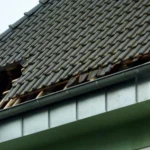
Missing shingles in multiple areas. One or two missing shingles in one section can typically be repaired with matching replacements. But if shingles are missing in scattered locations across different sections of the roof, the shingle adhesive has failed broadly, a sign of systemic weakness that repair can’t fully address. These are serious roof replacement signs that warrant a professional opinion.
Lifted or curling shingle edges. Wind slips under shingle edges and breaks the adhesive seal. If you see shingles with curled or lifted edges, they’re no longer waterproof. Every future rainstorm puts your attic and structure at risk. Knowing how to know if roof needs replacement means recognizing that lifted edges aren’t just cosmetic.
Damaged or separated flashing. Flashing around chimneys, skylights, and roof valleys is critical for waterproofing. Wind can pull flashing loose, and even small gaps allow significant water intrusion over time. Widespread flashing failure paired with shingle damage typically justifies a full replacement conversation with your contractor.
Sagging or uneven roof planes. If sections of your roof look uneven or are visibly sagging after a wind event, there may be structural damage to the decking beneath the shingles. This is a replacement-level emergency and requires immediate professional inspection, it’s one of the most urgent signs you need a new roof.
Heavy Rain: The Slow Threat That Compounds Everything Else
Rain alone rarely destroys a roof in one event. But heavy, prolonged rainfall reveals vulnerabilities that already existed, and it dramatically accelerates damage left behind by hail or wind.
How to Know If Roof Needs Replacement After Rain Events
Persistent interior leaks after every rain. If you’re placing buckets every time it rains, your roof has structural failure points, not just cosmetic ones. Leak location doesn’t always correspond to the failure point on the roof, so professional inspection is essential. This is the clearest answer to how to know if roof needs replacement short of a full inspection.
Mold or mildew in the attic. Moisture that gets in and stays in creates the perfect conditions for mold. If you notice a musty smell or visible mold growth in your attic, water has been infiltrating for a while. This often indicates more extensive rot in the underlayment or decking that requires full replacement — and confirms the signs you need a new roof have progressed beyond repair.
Rotting roof decking. A licensed roofer inspecting your attic after heavy rain events may find soft, spongy wood on the decking. Rotted decking cannot hold fasteners, meaning new shingles won’t attach properly. At this point, a complete roof replacement is the only structurally sound solution.
Roof Lifespan: When Age Tips the Scale Toward Replacement
Even perfect storm repairs won’t extend a roof’s life indefinitely. Understanding the roof lifespan of your material type is a critical context for any post-storm decision. The average roof life varies significantly by material:
| Roofing Material | Average Roof Life |
| 3-tab asphalt shingles | 15–20 years |
| Architectural asphalt shingles | 25–30 years |
| Metal roofing | 40–70 years |
| Tile (clay or concrete) | 50+ years |
| Wood shake | 20–25 years |
If your roof is within 5 years of the end of its expected roof lifespan and has sustained moderate or worse storm damage, the math almost always favors replacement. You’ll spend nearly the same in repairs now, face more repairs sooner, and potentially not recoup insurance value on an aging structure.
What Does Roof Replacement Cost in 2025–2026?
Understanding roof replacement cost before you get contractor quotes helps you avoid being overcharged or undersold on poor materials.
- National average cost to replace roof: $8,000–$15,000 for a typical single-story home
- New roof cost per square foot: $3.50–$7.50 for asphalt shingles; $8–$15 for metal; $10–$20 for tile
- Roof replacement estimate factors: Roof pitch (steeper = more labor), square footage, material choice, tear-off of old layers, local labor market
Getting an accurate roof replacement estimate from at least two contractors ensures you’re not overpaying. The total cost to replace roof also depends heavily on your region — labor costs in Florida and Colorado can run 15–25% higher than national averages.
Roof Financing Options
Most reputable roofing contractors offer roof financing options for qualified homeowners, including:
- Insurance claim + financing gap coverage — Your insurer covers the depreciated value; a contractor financing plan covers the rest
- HELOC (Home Equity Line of Credit) — Lower interest rates if you have built equity
- FHA Title I home improvement loans — Government-backed options for qualifying homeowners
- Contractor payment plans — Many offer 0% interest for 12–24 months through third-party lenders
Never let a contractor pressure you into signing a contract before your insurance adjuster has completed their assessment. Always explore all available roof financing options before committing to out-of-pocket payment.
Regional Considerations: Florida, Texas, Colorado, And More
Storm patterns and building codes vary significantly by region, and so does the right approach to post-storm roof replacement.
Roof replacement in Florida carries unique considerations: Florida’s high-velocity hurricane zone (Miami-Dade and Broward counties) requires roofing materials to meet some of the strictest wind-resistance codes in the country. After any hurricane or tropical storm, Florida homeowners should have a licensed roofer inspect for wind uplift damage to the underlayment — not just the visible shingles. Florida’s Citizens Insurance program also has specific inspection requirements tied to roof lifespan and age.
Roofing contractor in Texas — Texas sits in one of the most hail-active regions in the United States, particularly the “Hail Alley” corridor covering DFW, San Antonio, and Austin. After storms, “storm chasers” (unlicensed contractors from out of state) saturate affected neighborhoods. Always verify that any Roofing contractor in Texas holds a valid state-registered license and carries general liability and workers’ comp insurance before signing anything. Getting a proper roof replacement estimate from a local, verified contractor protects you from inflated post-storm pricing.
Licensed roofer in Colorado — Hail damage is Colorado’s number-one property insurance claim driver. If you’re planning a roof replacement in Colorado, look for a licensed roofer in Colorado familiar with Class 4 impact-resistant shingles — many Colorado insurers offer significant premium discounts for upgrading to these materials during replacement. Ask your contractor to walk you through how the new roof cost per square foot changes when upgrading to impact-resistant materials versus standard asphalt.
Should You Get a Roof Inspection After Every Major Storm?
Yes and it doesn’t have to cost you anything. Many licensed roofing contractors offer free post-storm roof inspections. Searching for a roof inspection near me after a significant weather event is a smart first step, even if you don’t see obvious damage. Subtle damage that goes uninspected today becomes a leak, a mold problem, or a voided warranty claim tomorrow.
When scheduling your inspection:
- Choose a licensed roofer with local references, not a door-to-door solicitor
- Ask for a written inspection report with photos
- Get at least two quotes before committing to replacement
- Use your roof replacement estimate comparison to negotiate fairly
Your Post-Storm Roof Replacement Checklist
- Inspect gutters for granule accumulation immediately after the storm
- Walk your property and look for dents on cars, AC units, and gutters as hail indicators
- Check ceilings, walls, and attic for moisture or water stains
- Document all visible damage with time-stamped photos
- Contact your insurance company to start a claim within the policy window
- Search roof inspection near me to schedule a free visit with a licensed roofer
- Compare repair estimate vs. roof replacement cost in context of your roof lifespan
- Review all available roof financing options if there’s a gap between insurance payout and cost to replace roof
When to Replace Roof vs. Repair It
Repair when: Damage is localized to one area, the roof is less than 10 years old, and the structural integrity of the decking is sound.
Replace when: Damage is widespread across multiple sections, the roof is approaching end of its roof lifespan, there are interior leaks or attic moisture, or the cost to replace roof is within range of repair costs given the roof’s age.
When to replace roof is ultimately a calculation of damage severity, material age, and long-term value, not just what’s visible from the curb. When in doubt, get a second opinion from a licensed roofer, not just from your insurance adjuster, who works for the insurance company, not for you.
Storm damage is stressful. But knowing exactly what roof replacement signs to look for, and when replacement is the smarter long-term investment, puts you firmly in control of the outcome.
Have questions about your roof after a recent storm? Leave a comment below or connect with a licensed roofing contractor for a free assessment.