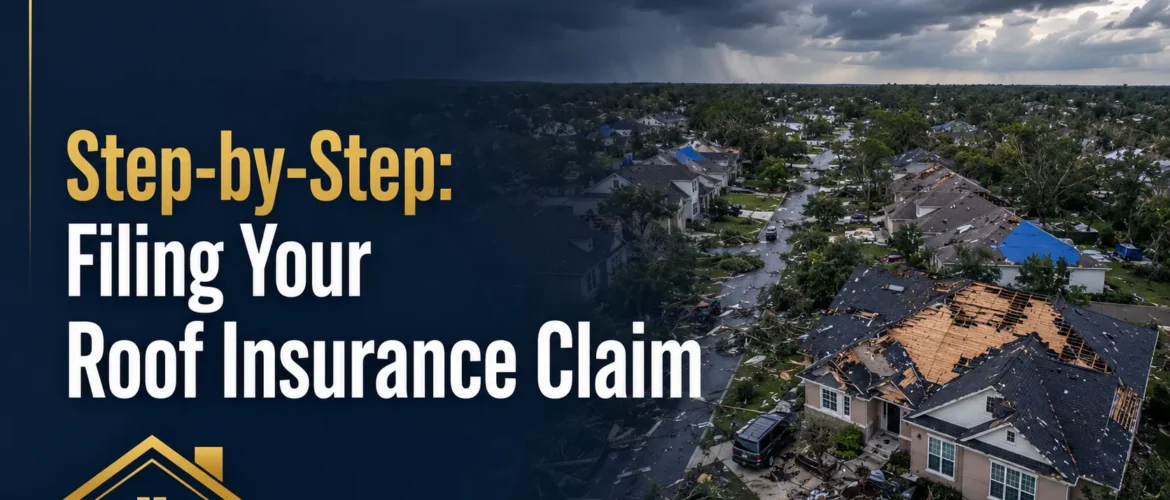
A storm just hit your area. You look up and see missing shingles, dented gutters, and water stains spreading across your ceiling. The damage is real, but the confusion about what to do next is even worse. Filing a roof insurance claim after storm damage does not have to be complicated if you follow the right steps in the right order. This guide walks you through every stage of the process, from documenting damage to getting your roof replaced at little or no out-of-pocket cost. If you need immediate help, Roofing First Solutions offers a free roof inspection to assess your damage before you even call your insurance company.
Why You Should Never Wait to File a Storm Damage Claim
Time is your biggest enemy after a storm. Most homeowner insurance policies have strict deadlines for filing storm-related claims, typically ranging from one to two years depending on your state and insurer. However, waiting even a few weeks can create problems. Unfixed damage gets worse with every rain. Mold can start growing within 48 hours of water intrusion. Insurance adjusters may argue that secondary damage was caused by neglect rather than the original storm event. The safest approach is to document everything immediately and start the claims process within the first 72 hours.
Step 1: Document All Visible Damage Immediately
Before you touch anything, grab your phone and start documenting. Take photos and videos of every area of visible damage, both interior and exterior. Capture wide shots of your roof from the ground, close-ups of damaged shingles or flashing, water stains on ceilings and walls, dented gutters and downspouts, and any debris on your property. Create a written log with the date, time, and a description of each damaged area. Save weather reports or alerts for your area on the day of the storm. This documentation becomes your strongest evidence when dealing with your insurance adjuster.
What Most Homeowners Miss When Documenting
Hail damage is often invisible from the ground. Wind damage can lift shingles without tearing them off, creating entry points for water that you cannot see from below. Damaged flashing around vents, chimneys, and skylights is another commonly missed issue. This is exactly why a professional inspection matters. A licensed roofer knows where to look and can identify damage that homeowners typically overlook.
Step 2: Call a Licensed Roofing Contractor Before Your Insurance Company
This step surprises most homeowners, but it is the most important one. Call a professional roofing contractor before you call your insurance company. A qualified contractor will perform a thorough damage assessment, document everything properly for your claim, identify all areas of damage including hidden issues, and provide a detailed scope of work and estimate that matches insurance industry standards. At Roofing First Solutions, our storm damage repair team has handled hundreds of insurance claims across Texas, Florida, Arizona, Georgia, Colorado, and Illinois. We know exactly what adjusters look for, and we document accordingly.
Why This Order Matters
If you call your insurance company first, they send their own adjuster, whose job is to minimize the payout. Without a professional contractor’s documentation to compare against, you are relying entirely on the insurance company’s assessment. Having your own expert documentation creates accountability and often results in a significantly higher claim approval.
Step 3: File Your Insurance Claim With Proper Documentation
Once your contractor has completed their inspection, call your insurance company to file the claim. Have the following information ready: your policy number and coverage details, the date of the storm event, your contractor’s inspection report with photos, your own documentation and weather reports, and a written description of all damage. Request a claim number and ask about next steps and timelines. Your insurance company will schedule an adjuster visit, which is where having your contractor present makes a significant difference.
Step 4: Be Present During the Adjuster’s Inspection
When the insurance adjuster arrives, have your roofing contractor meet them at your property. Your contractor can walk the roof with the adjuster, point out damage that might be overlooked, compare their documentation against the adjuster’s findings, and ensure the scope of work is accurate and complete. This step alone can mean the difference between a partial approval and full coverage for your roof replacement. Roofing First Solutions provides insurance claim assistance at no additional cost, and our team has the experience to advocate on your behalf during the adjuster meeting.
Step 5: Review Your Claim Approval and Begin Repairs
After the adjuster submits their report, your insurance company will send a determination letter and, if approved, an initial payment. Review this carefully with your contractor to ensure all damage is covered. If the approved amount seems low, your contractor can file a supplement request with additional documentation for items the adjuster may have missed. Once you are satisfied with the claim approval, schedule your roof replacement or repair. At Roofing First Solutions, we handle the entire process from start to finish, including supplemental claims, so you get the coverage you deserve.
Common Mistakes That Get Roof Insurance Claims Denied
Understanding what not to do is just as important. Many homeowners make avoidable mistakes that lead to claim denials or reduced payouts. These include waiting too long to file the claim, attempting DIY repairs before the adjuster visits, not having a professional inspection done, failing to document damage thoroughly, signing contracts with unlicensed or uninsured contractors, and accepting the first offer without reviewing it with a professional. Avoid all of these by working with a licensed, insured roofing company that specializes in storm damage and insurance claims.
What Does a Roof Insurance Claim Typically Cover?
Standard homeowner insurance policies generally cover damage caused by wind, hail, falling trees or debris, heavy rain that enters through storm-created openings, and ice dams in applicable regions. Covered repairs often include full or partial roof replacement, damaged flashing and vent replacement, gutter and downspout repair, interior water damage repair, and temporary tarping and emergency protection. Your specific coverage depends on your policy type, deductible, and the insurance company’s assessment.
Protect Your Home Before the Next Storm Hits
Storm season does not wait, and neither should you. If your roof has been through a recent storm, or if you are not sure whether your roof can handle the next one, take action today. Roofing First Solutions offers free, no-obligation roof inspections for homeowners across Texas, Florida, Arizona, Georgia, Colorado, and Illinois. Our licensed experts will assess your roof, document any issues, and guide you through the insurance process if needed.
Call us today at +1 (507) 203-8974 or visit roofingfirstsolutions.com to schedule your free inspection.
Protection Above Everything. Serving TX | FL | AZ | GA | CO | IL