Hail can destroy a roof in minutes, but the most dangerous part is that most of the damage is completely invisible from the ground. After a hailstorm, many homeowners look up at their roof, see nothing obviously wrong, and assume everything is fine. Months later, they discover leaks, mold, and structural issues that trace directly back to that storm. Knowing what to look for can save you thousands of dollars and protect your home from further damage. Here are seven hidden signs of hail damage that most homeowners miss entirely.
1. Circular Dents or Dark Spots on Shingles
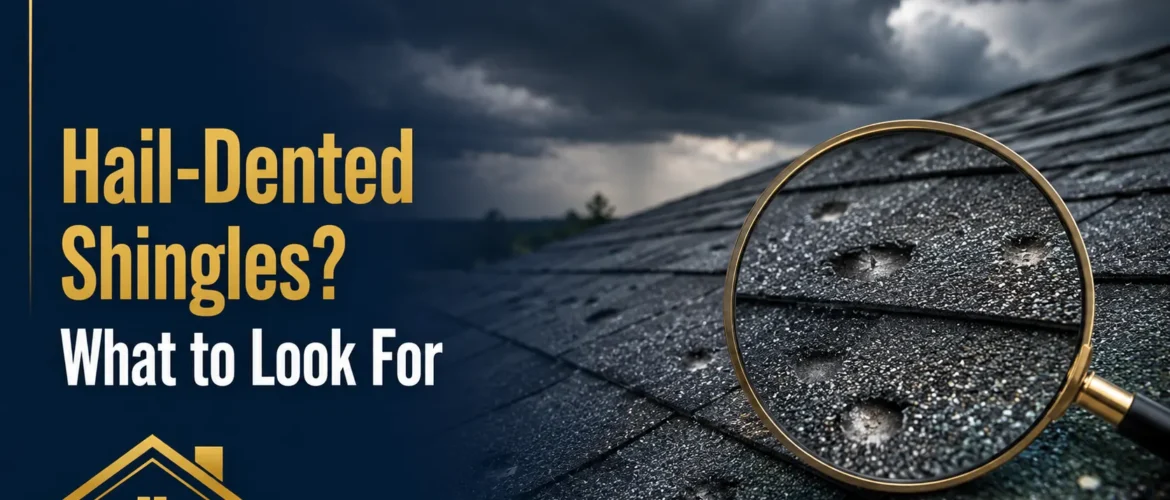
Hail impacts leave circular dents on asphalt shingles that are often only visible up close. These dents bruise the shingle material and knock loose the protective granule coating. From the ground, they may look like random dark spots or discoloration. Each impact point is a weak spot where water can penetrate over time, eventually causing leaks. A professional roofer can identify these by touch and sight during a close-up inspection.
2. Granule Loss in Gutters and Downspouts
After a hailstorm, check your gutters and downspouts for excessive granule buildup. Asphalt shingles are coated with ceramic granules that protect against UV rays and weather. When hail hits, it knocks these granules loose. If your gutters look like they are filled with coarse black sand, your shingles have likely taken significant damage. Without their granule coating, exposed shingles deteriorate much faster and become vulnerable to cracking and leaks.
3. Dented or Damaged Metal Components
Roof vents, flashing, chimney caps, and satellite dishes are made of metal and show hail damage more clearly than shingles. Look for small dents, dings, or deformation on any metal component on your roof. If your metal vents and flashing are dented, your shingles almost certainly took similar impacts. This is one of the easiest ways to confirm hail damage without getting on the roof yourself.
4. Cracked or Split Shingles
Large hailstones can crack shingles on impact, especially on older roofs where the material has become brittle. These cracks may not be visible from below, but they create direct pathways for water infiltration. Even hairline cracks can expand over time with temperature changes, turning a small issue into a major leak within a single season.
5. Soft or Bruised Spots Underfoot
When a professional roofer walks across a hail-damaged roof, they can feel soft or spongy spots where the underlying mat of the shingle has been compromised. These bruised areas are structurally weakened even though they may look normal from above. This is damage that only a trained professional can detect, which is why a post-storm inspection is so critical.
6. Exposed Fiberglass Mat
In severe cases, hail impact can knock away enough granules to expose the fiberglass mat underneath the shingle surface. Exposed mat appears as shiny or bright patches on an otherwise textured surface. Once the mat is exposed, the shingle has essentially lost its weather protection and will fail rapidly. Any area of exposed mat requires immediate attention and likely shingle replacement.
7. Damage to Surrounding Property
Sometimes the best evidence of roof hail damage is found on the ground. Check your air conditioning unit, outdoor furniture, car, deck, fence, and windowsills for dents and damage. If hail was large enough to dent your car or outdoor AC unit, it was large enough to damage your roof. Document all property damage with photos, as this supports your insurance claim for roof repair or replacement.
What to Do If You Suspect Hail Damage
If you notice any of these signs, do not attempt to inspect the roof yourself. Walking on a damaged roof is dangerous and can worsen existing damage. Instead, call a licensed roofing contractor for a professional hail damage inspection. At Roofing First Solutions, we provide free, no-obligation post-storm inspections. Our team documents all damage thoroughly and can guide you through the insurance claim process if your roof needs repair or replacement. Read our complete guide on how to file a roof insurance claim after storm damage for step-by-step instructions.
Why Timing Matters After a Hailstorm
Insurance companies have filing deadlines, and unrepaired hail damage gets worse with every passing storm. What starts as a few dented shingles can become interior water damage, mold growth, and structural deterioration within months. The sooner you get a professional inspection, the better your chances of a full insurance claim approval and a properly restored roof.
Do not wait. Call Roofing First Solutions at +1 (507) 203-8974 for your free hail damage inspection. Visit roofingfirstsolutions.com
Protection Above Everything.Serving TX | FL | AZ | GA | CO | IL